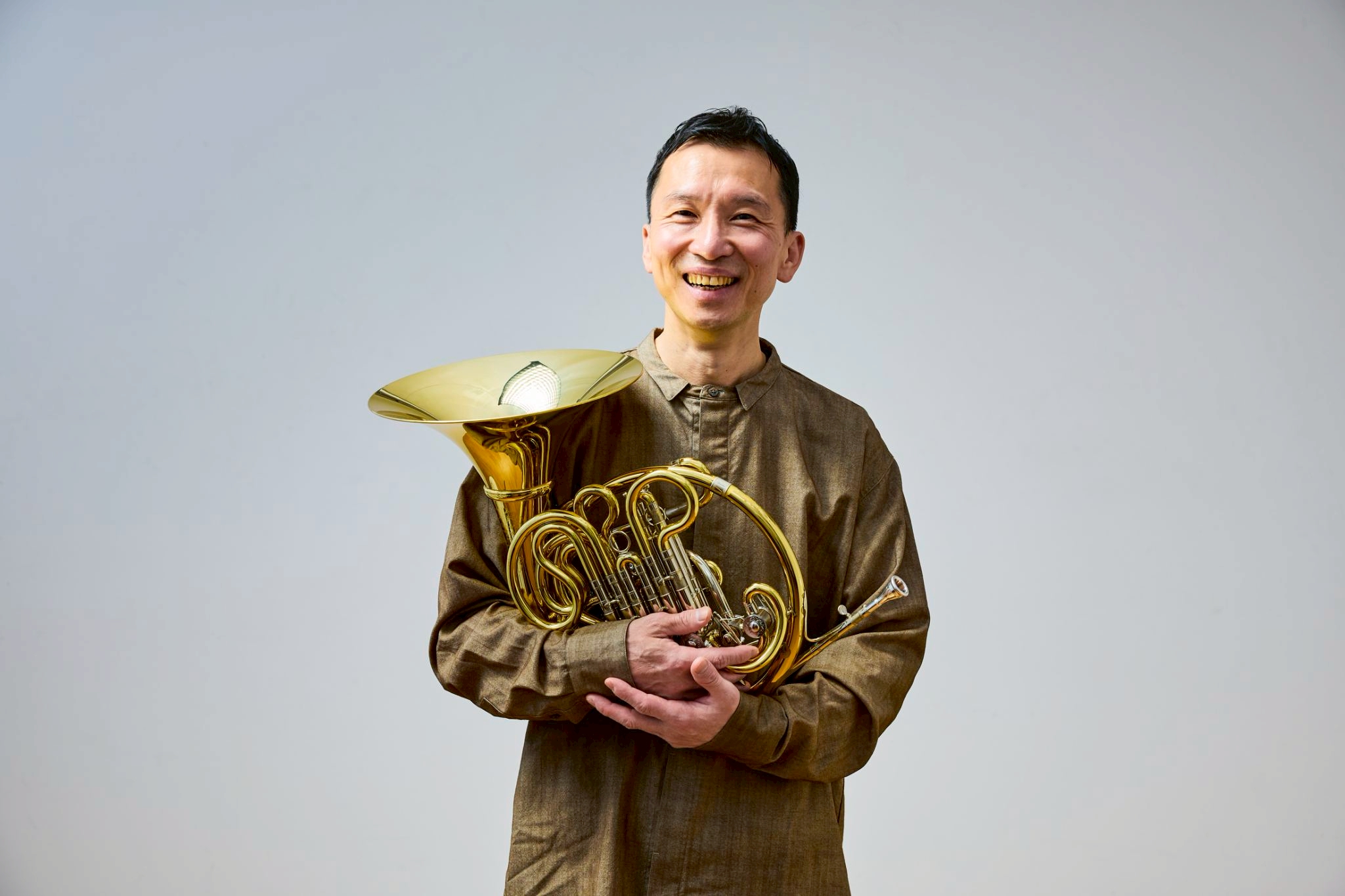
第58回ホルン国際シンポジウム日髙剛リサイタルプログラム
58th International Horn Symposium Conposer’s Note
https://www.hornsociety.org/symposium
AlphaJean-Michel Defaye (1932–2024)
フランスの作曲家・ピアニスト・編曲家。
パリ音楽院で学び、数多くの映画音楽や室内楽作品を手掛ける一方、金管楽器、とりわけホルンのための作品を数多く残した。
美しい旋律と洗練された和声感覚を持つ作品は、世界中のホルン奏者に親しまれており、《Alpha》もその代表作の一つとして広く演奏されている。
AlphaJean-Michel Defaye (1932–2024)
Jean-Michel Defaye was a French composer, pianist, and arranger.
After studying at the Paris Conservatoire, he composed numerous film scores and chamber works while making a particularly significant contribution to the brass repertoire, especially for the horn.His music, distinguished by its lyrical melodies and refined harmonic language, is beloved by horn players around the world. Alpha is one of his most celebrated works and remains a staple of the international horn repertoire.
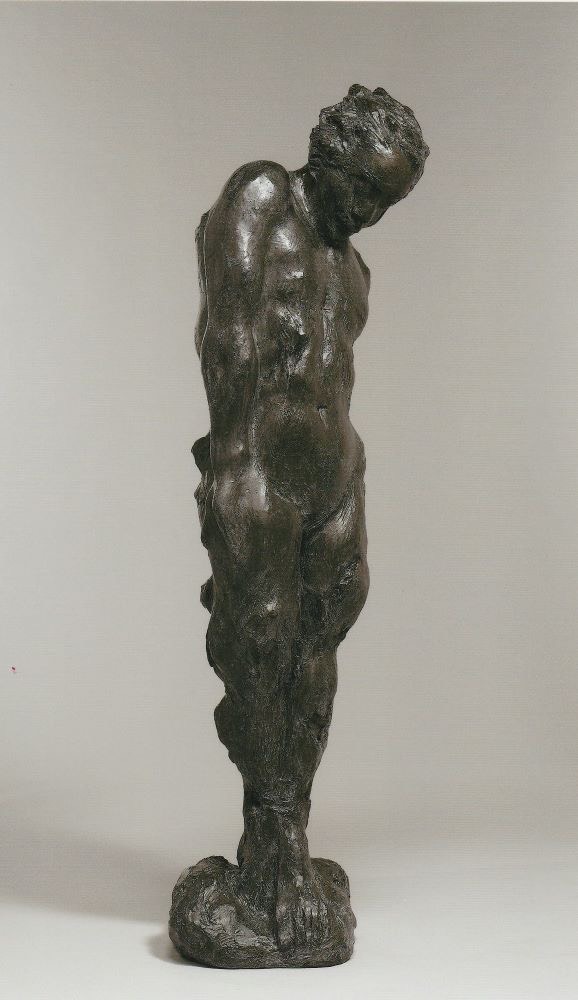
彫刻家片山博詞より
Jean-Michel Defaye (ジャン-ミシェル・ドュファイ) 作曲「ALPHA」からのインスピレーションを形象化した彫刻。物事の最初であり、不確定な未知数としてのイメージも感じられたこのホルンとピアノの響きから、混沌とした世界に放り出されるように生まれ出ずる姿が湧いた。
Sculptor’s Notes Hiroshi Katayama
This sculpture was created as a visual interpretation of Alpha by Jean-Michel Defaye.Listening to the dialogue between the horn and piano, I sensed not only the beginning of all things, but also the image of an unknown, undefined existence. From that sound emerged the vision of a being cast into a chaotic world at the very moment of birth.
Messenger ― 雲に関する四つの考察ー 作曲:高木日向子
天候は人間の生活に大きな影響を与える。人類は古くから、雲の形や色、動きの変化を観察し、天候を予測してきた。言わば雲は、人間と天候を結ぶ「Messenger(使者)」である。
そして雲は、天候だけではなく、この世とあの世、さらには人間と神をつなぐ「Messenger」でもある。そのような感覚は、私たちの心の奥深くに今なお息づいているように思われる。
本作品は、現代社会を生きる私たちと雲との関わりを、四つの視点から考察した作品である。
I
人工衛星の発達により、私たちは空を見上げて天候を予測することが少なくなった。しかし、気象レーダーでも予測が難しいゲリラ豪雨に遭遇したときだけは、空を見上げ、温度や湿度、風を肌で感じ取るという原始的な感覚に立ち返ることになる。
II
あるテレビ番組で、幼くして母親を亡くした子どもが、空を見上げて「ママの雲」を見つけた様子が紹介されていた。幼いながらも母の死を受け入れる姿に心を打たれると同時に、雲はこの世とあの世をつなぐ「Messenger」でもあるのだと確信した。
III
「地震雲」と呼ばれる雲がある。この雲が現れると、地震への心の準備を始める人も少なくない。しかし、地震雲と地震発生との関連性は、いまだ科学的には証明されていない。科学だけではなく、伝承や経験を信じる人間の姿勢は、現代にもなお残されている。
IV
2019年夏、百舌鳥・古市古墳群が世界遺産に登録され、ドローンによって撮影された古墳の映像を目にする機会が増えた。私たちは、いとも容易く雲の視点から古墳の姿を眺めることができる。しかし古代の人々にとって、その景色は天上の者だけが目にすることのできる、神聖な捧げ物であったのではないだろうか。
Messenger -4 studies on clouds- Composer: Hinako Takagi
Weather has a profound influence on human life. Since ancient times, people have observed the shapes, colors, and movements of clouds in order to predict changes in the weather. In this sense, clouds may be seen as “messengers” connecting human beings and the weather.
Clouds are also messengers not only of weather, but of the world of the living and the world beyond, and even between human beings and the divine. Such a feeling, I believe, still lives deep within our hearts.
This work reflects on the relationship between clouds and those of us living in modern society from four different perspectives.
I
With the development of satellites, we have become less likely to look up at the sky to predict the weather.
Yet when we encounter sudden localized downpours that even weather radar struggles to predict, we return to a more primal awareness: looking up at the sky and sensing temperature, humidity, and wind with our own skin.
II
In a television program, I once saw a young child who had lost their mother at an early age look up at the sky and find “Mama’s cloud.”
I was deeply moved by the child’s acceptance of their mother’s death, despite their young age, and at the same time became convinced that clouds are also messengers connecting this world and the next.
III
There are clouds known as “earthquake clouds.”
When such clouds appear, many people begin to prepare themselves mentally for an earthquake. However, no scientific evidence has yet proven a connection between earthquake clouds and the occurrence of earthquakes.
The human tendency to believe not only in science, but also in tradition and personal experience, remains with us even today.
IV
In the summer of 2019, the Mozu-Furuichi Kofun Group was inscribed as a World Heritage Site, and opportunities to see aerial footage of the tombs captured by drones increased.
Today, we can easily view the kofun from the perspective of the clouds. For ancient people, however, this view may have been something only heavenly beings could behold—a sacred offering to the divine.
高木日向子オフィシャルサイト
Takagi Hinako Officialsite
https://hinako-takagi.studio.site
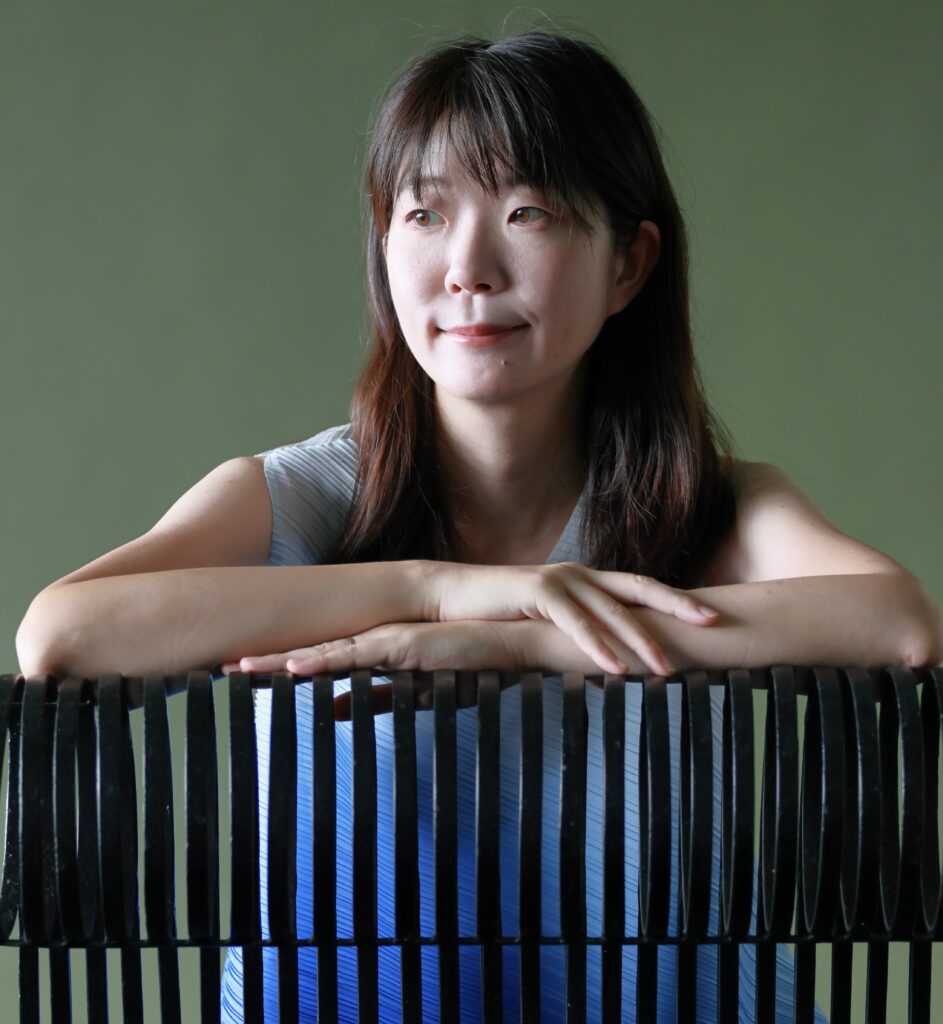
Standing on the Mirage for horn and piano 作曲:坂田直樹
本作品は、ホルン奏者・日髙剛の委嘱により作曲された。
創作のテーマとなったのは、彫刻家・片山博詞による作品《OMEGA》である。この彫像は直立した人体をモチーフとしているが、その全体はまるで流体のような表情を持つ。炎のようでもあり、水に揺らぐ姿のようでもあるその造形は、彫像内部のエネルギーが波立っているかのようである。
一方、足先には戦禍による変形が見られる。そこには身体に刻まれた歴史と、人間の生命に対する敬虔な祈りが宿っている。
《陽炎に立つ》は、この《OMEGA》から得られた着想をもとに作曲された。
本作品の創作には、二つのキーワードがある。
第一は「痛み」である。
打撃的な表現や重苦しい響きは、その感覚を象徴している。
第二は「揺らぎ」である。
これは我々のしなやかな生命力を象徴し、作品全体を貫く歌へとつながっていく。
ホルンの楽器法では、多様な「揺らぎ」の表現に着目した。口の状態、右手によるベルの塞ぎ具合、特殊なタンギングや運指など、さまざまな奏法によって彫刻の表情を音でなぞっている。さらに、声とホルンを組み合わせることで生まれる複雑なうなりは、ピアノの密集した響きと鈍く溶け合い、一つの音響空間を形成する。
本作品は大きく3つの部分から構成される。
第1部では、ピアノの重厚な響きの中からホルンが現れ、徐々に歌を紡いでいく。
これに対し第2部では、性格の異なる要素が並列的に配置される。冒頭ではホルンのモノローグにピアノが応え、続くモデラートでは、一つの旋律線を二つの楽器が受け渡しながら展開する。
最後には、ホルンのポルタメントに彩られながら、揺らぐピアノのハーモニーが持続する。音楽は次第に密度を高め、クライマックスへと向かう。
コーダでは、ベルを外した状態でホルンが演奏される。それは、不可逆的に朽ちながらもなお尊厳を宿す、人間の身体を象徴している。
Standing on the Mirage Composer: Naoki Sakata
Standing on the Mirage was composed for horn player Takeshi Hidaka as a commissioned work.
The piece is inspired by OMEGA, a sculpture by Hiroshi Katayama. Although the sculpture depicts an upright human figure, its entire form possesses the fluidity of flowing water. At times it evokes flames; at others, a body wavering in water. Its shape suggests an inner energy rippling beneath the surface.
At the same time, the distorted feet hint at the traces of conflict, expressing both the history engraved upon the human body and a profound reverence for life. Standing on the Mirage was composed from this artistic vision.
The work is built around two central ideas.
The first is pain, expressed through percussive gestures and dark, weighty sonorities.
The second is fluctuation—a symbol of the resilience and vitality of human life—which ultimately unfolds into the lyrical character that permeates the work.
Particular attention is given to the many ways the horn can create subtle fluctuations in sound. Variations in embouchure, hand position inside the bell, special tonguing techniques, and alternative fingerings are employed to mirror the ever-changing expressions of the sculpture.
The combination of the performer’s voice with the horn produces complex resonances that merge with the dense sonorities of the piano, creating a distinctive sound world.
The composition is broadly divided into three sections.
In the first, the horn gradually emerges from the piano’s dark and resonant textures, unfolding into an expressive melodic line.
The second section contrasts with the first by juxtaposing musical ideas of different characters. It opens with a dialogue between the horn and piano, followed by a Moderato in which the two instruments share a single melodic line. Finally, the horn’s portamento is set against sustained, shimmering harmonies in the piano as the music steadily intensifies toward its climax.
In the coda, the horn is performed with the detachable bell removed, symbolizing the human body—fragile and destined to decay, yet retaining its inherent dignity.
坂田直樹オフィシャルサイト
Home JP – NAOKI SAKATA -Music composer-
https://naokisakata.net/jp
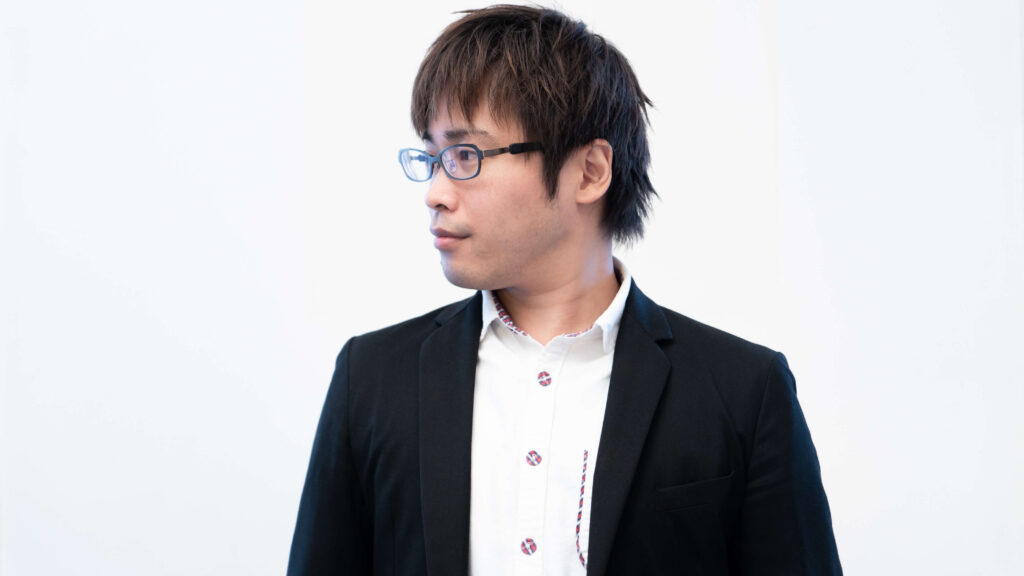
彫刻家:片山博詞によるOMEGA制作意図OMEGA(2025)
《OMEGA》の構想は、2021年に出会った、1945年夏に長崎で被爆された方の足元だけを写した一枚の写真から始まりました。
ギリシャ文字の最後の文字である「OMEGA」は、「終わり」を象徴しています。この作品には、争いそのものが「最後」となることへの願いを込めています。
終戦および広島・長崎への原爆投下から80年という節目にあたり、広島と長崎が最後の被爆地となること、そしてウクライナやガザで続く争いが終結することを願い、犠牲となられたすべての方々への鎮魂の祈りを込めて制作しました。
OMEGA (2025)
The conception of OMEGA began after encountering a photograph in 2021 that focused solely on the feet of a survivor of the atomic bombing in Nagasaki in the summer of 1945.
As its title suggests, OMEGA—the final letter of the Greek alphabet—symbolizes an ending. Through this sculpture, I express my hope that conflict itself may one day come to an end.
Created in the 80th year since the end of World War II and the atomic bombings of Hiroshima and Nagasaki, this work is offered as a prayer: that Hiroshima and Nagasaki remain the last cities ever to suffer atomic bombing, that the wars in Ukraine and Gaza may come to an end, and in remembrance of all those who have lost their lives.
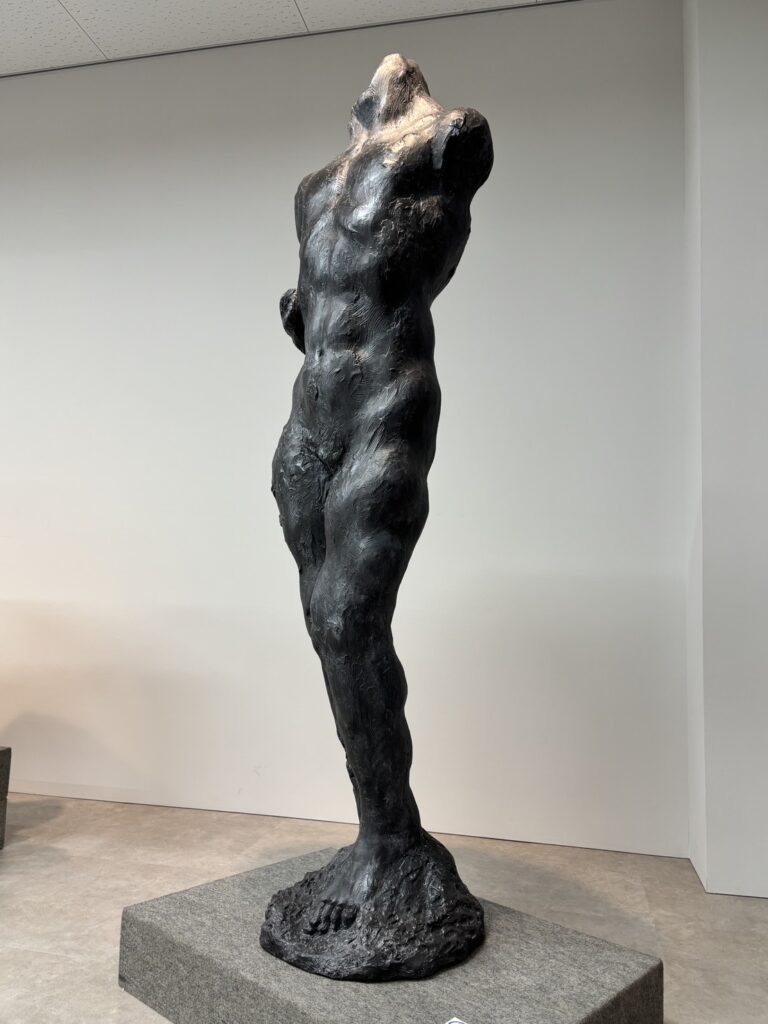
片山博詞(かたやま・ひろし)
熊本県出身。長崎大学教育学部卒業、上越教育大学大学院芸術コース修了。彫刻家として、ブロンズ彫刻や石彫の作品を制作する傍ら、2006年、「片山博詞彫刻展―祈りの形象 新しい意味を紡ぐ―」(福岡市美術館)では、すべての来場者が視覚に頼らず触れて鑑賞できる彫刻展として開催し、6日間の会期で入場者が1万6千人を超え反響を得る。
その後も、美術館や学校、介護・医療・福祉施設などで、視覚でだけでなく、触覚を通しても鑑賞できる展覧会や視覚に頼らない造形ワークショップ等を数多く実施している。2021年には「ユニバーサル・ミュージアム―さわる!“触”の大博覧会―」(国立民族学博物館ほか巡回展)に出品し、彫刻に触れて鑑賞している様子がNHK「バリバラ」でも紹介された。
2007年、第42回昭和会展日動美術財団賞受賞。2014年、青木秀賞奨励賞(福岡文化連盟)2022年、福岡市文化賞受賞。作品は笠間日動美術館、直方谷尾美術館、福岡市博物館、九州大学病院をはじめ、多くの美術館や教育・医療・福祉施設に収蔵されている。現在、日展特別会員、日本彫刻会運営委員、片山博詞モニュメント工房代表。
Hiroshi Katayama (Sculptor)
Hiroshi Katayama was born in Kumamoto, Japan. He graduated from the Faculty of Education at Nagasaki University and completed the Graduate Program in Art at Joetsu University of Education.
While creating bronze and stone sculptures, Katayama has devoted his artistic practice to exploring sculpture as a tactile experience. In 2006, his solo exhibition Hiroshi Katayama Sculpture Exhibition: Forms of Prayer – Weaving New Meanings at the Fukuoka Art Museum attracted more than 16,000 visitors in just six days. The exhibition was distinctive in that all works were designed to be appreciated through touch as well as sight, allowing every visitor to experience the sculptures regardless of visual ability.
Since then, he has organized numerous exhibitions and workshops at museums, schools, and healthcare and welfare facilities throughout Japan, promoting art that can be experienced through both touch and vision. In 2021, his work was featured in the traveling exhibition Universal Museum: Touch! The Great Exhibition of Tactile Experiences, organized by the National Museum of Ethnology, and was also introduced on NHK’s television program Baribara.
Katayama received the Nitto Art Foundation Award at the 42nd Showa-kai Exhibition in 2007, the Aoki Shu Encouragement Award from the Fukuoka Cultural Federation in 2014, and the Fukuoka City Cultural Award in 2022.
His works are included in the collections of the Kasama Nichido Museum of Art, Nogata Tanio Museum of Art, Fukuoka City Museum, Kyushu University Hospital, as well as numerous museums and educational, medical, and welfare institutions throughout Japan.
He is currently a Special Member of Nitten, a Board Member of the Japan Sculpture Society, and the Director of the Hiroshi Katayama Monument Studio.